
 Dining Room
 Kitchen
 Hallway
 Living Room
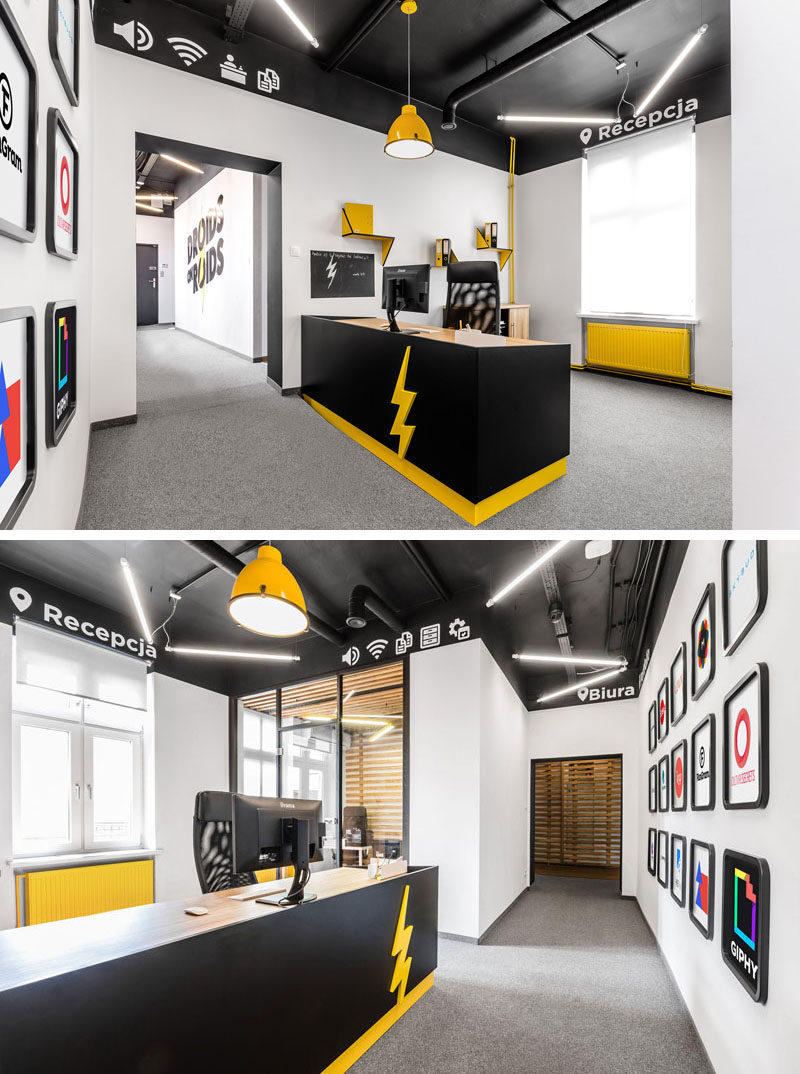 Office
 Bed Room
A cryptocurrency holder faces a recurring friction point: managing digital assets across multiple platforms. Purchasing Bitcoin or Ethereum typically sends users to an external exchange, selling requires navigating another interface, and swapping between tokens often involves bridging through different services. Each step introduces a separate account, separate security model, separate fee structure, and separate record of user activity. For individuals who have invested in a hardware wallet specifically to keep private keys offline and secure, this fragmentation undermines the original security decision.
Ledger Live, the official application for managing assets on Ledger’s hardware devices, has integrated purchasing, selling, and token-swapping functionality directly into its dashboard. These features remain non-custodial, meaning private keys never leave the hardware device and the user retains full control over their assets. The consequence is a meaningful reduction in friction without a corresponding reduction in security. Understanding how these built-in features work, what they cost, and how they differ from traditional exchanges is essential for users who want to manage crypto holdings efficiently while maintaining the protection that hardware custody provides.

The fundamental difference between Ledger Live and exchange accounts
A centralized exchange holds cryptocurrency on behalf of the user in exchange accounts. The exchange controls the private keys, processes deposits and withdrawals, matches buy and sell orders, and maintains custodial responsibility over the assets. The user creates an account, verifies their identity, and trusts the exchange to keep balances accurate and accessible. In return, they receive convenience: a familiar interface, immediate market access, and straightforward withdrawal to an external address.
Ledger Live operates on a fundamentally different model. The hardware device—whether a Nano S Plus, Nano X, or Stax—holds the private keys. The Ledger Live application on desktop or mobile acts as a companion interface that displays balances, constructs transactions, and broadcasts them to the blockchain. When a user initiates a purchase through Ledger Live, they are not depositing funds into an exchange account. They are authorizing a direct transaction that moves cryptocurrency from a third-party provider’s address to their own hardware-controlled address. The difference is not merely semantic. It changes where custody lives, how long assets remain in transit, and who has a record of the user’s transaction.
This custody preservation is the reason to use Ledger Live for trading rather than simply moving funds to a conventional exchange and back. A user who maintains a balance on an exchange account is relying on that exchange’s security practices, insurance coverage, and regulatory status. They are also creating an ongoing record that links their identity to specific holdings and transaction history. With Ledger Live’s integrated features, the user retains custody throughout the entire process. Funds move from the provider directly to the user’s hardware-controlled address, and they remain there under the user’s sole control.
The trade-off is that convenience becomes bounded. Ledger Live does not offer margin trading, lending, or other complex financial products. It does not provide an order book where the user can set limit prices and wait for execution. Instead, it offers straightforward purchasing, selling, and swapping through integrated partners, with prices and fees displayed in advance. For most users managing a portfolio of long-term holdings or making periodic purchases, this boundary is acceptable. For active traders requiring leverage or sophisticated order management, an exchange account remains necessary and appropriate.
How purchasing crypto directly in Ledger Live works
The purchasing flow in Ledger Live begins with selecting the asset and amount. The application displays available providers—typically Coinbase, Kraken, or other regulated partners—along with their quoted prices and fees. The user can compare offers before committing. Once a purchase is approved, the flow typically routes through the provider’s interface, where the user completes payment via bank transfer, card, or other methods. The critical moment arrives when the transaction settles: the purchased cryptocurrency is sent directly to an address controlled by the Ledger hardware device, not to an exchange wallet.
This direct-to-hardware flow creates several practical effects. First, the assets are never held in the provider’s custody. The provider facilitates the purchase but does not store the resulting cryptocurrency. Second, the Ledger Live app displays incoming balances as they confirm on the blockchain, typically within minutes to hours depending on network congestion. Third, the user never needs to create an account with the purchasing provider or undergo separate identity verification for each purchase. Ledger’s integration with providers handles authorization in a way that avoids repeated KYC friction.
Fees deserve specific attention because they are where purchasing through Ledger Live diverges from assumptions based on exchange spreads. When buying through a conventional exchange, the user pays a spread or commission set by that exchange. Ledger Live’s integrated purchases route through partners that quote prices including their own margin and all intermediary costs. These fees are shown before confirmation, but users should recognize that the “price” displayed is not the asset’s market rate. It includes the provider’s markup, which compensates them for the service of converting fiat currency to cryptocurrency and routing it to the user’s address. Comparing quotes across available providers is the practical defense against overpaying for this convenience.
The Ledger hardware device remains offline throughout the entire process. The device does not connect to the internet, does not see the purchase interface, and does not interact with the payment processing. The user’s Ledger simply receives the resulting cryptocurrency at the conclusion of the transaction. This architectural decision means that malware on the connected computer or mobile device cannot intercept the purchase or redirect it elsewhere. The private key required to move the cryptocurrency after it arrives is also protected by the device’s secure element and the user’s PIN, adding another layer between the asset and compromise.
Selling and converting back to fiat currency
Selling cryptocurrency through Ledger Live reverses the purchasing process. The user selects an asset, specifies the amount to sell, and reviews available providers and their quoted rates. A key difference from purchasing is that selling requires the Ledger device to sign the transaction that moves the cryptocurrency out of the user’s address. This is a security feature: even if someone gains access to the computer or phone, they cannot authorize the sale and transfer of funds without physically holding the Ledger device and entering the correct PIN.
Once the transaction is confirmed on the device, it broadcasts to the blockchain. The cryptocurrency moves to the provider’s address. The provider then completes the fiat currency transfer to the user’s linked bank account, typically within one to three business days depending on the user’s bank and jurisdiction. During this brief window, the cryptocurrency is technically held in the provider’s address, but the user has already signed it away and cannot reclaim it. The fiat conversion is now the provider’s responsibility and risk.
Users should note that selling through Ledger Live creates a specific record. The provider sees that the user is converting a particular amount at a particular time. This information may be subject to tax reporting requirements, regulatory disclosures, or other compliance obligations depending on jurisdiction. In many countries, the purchase date, cost basis, holding period, and gain or loss are used for tax calculations. Keeping detailed records of purchases and sales through Ledger Live becomes essential for accurate tax reporting, and users should not assume that the provider will automatically file tax forms on their behalf.
The fees for selling also warrant comparison across providers. Just as with purchasing, the quoted price includes the provider’s margin. A provider who quotes a higher buy price or lower sell price is effectively charging a wider spread for their service. Over multiple transactions, these differences compound. Users who sell regularly should review whether sticking with one provider is justified by loyalty benefits or if shopping across providers yields better overall returns.
Token swaps and in-app trading without leaving custody
One of the most useful features of Ledger Live is the ability to swap between cryptocurrencies—converting Bitcoin to Ethereum, Solana to USDC, or any supported pair—without ever leaving the application or moving funds to an exchange. The swap integrates with decentralized exchange aggregators or direct market maker partnerships that route the trade. The user sees a quoted output amount before committing, similar to the purchase and sell flows.
The mechanics differ slightly from purchasing or selling fiat. When swapping tokens, the user sends cryptocurrency from their Ledger-controlled address to the swap provider’s smart contract or intermediary. The provider processes the trade and sends the output token back to the same Ledger address. Throughout this process, the Ledger device signs the outgoing transaction, ensuring that the user—and only the user with the correct PIN and device—can authorize the swap. This means a compromised computer cannot initiate unexpected token swaps.
Swap pricing includes the same invisible factors as purchasing and selling: the aggregator’s margin, liquidity provider fees, and network transaction fees. A swap between two Ethereum tokens may include ERC-20 approval costs if the token is being swapped for the first time. Users should examine the estimated output and compare it to prices shown on other sources to calibrate whether the quote is reasonable. Major price discrepancies may indicate either a favorable arbitrage opportunity or a sign that the swap route is inefficient.
One practical consideration is slippage and volatility. If market conditions shift between the time the quote is displayed and the transaction is mined, the actual output may differ from the estimate. Ledger Live typically shows a slippage tolerance, allowing the swap to execute within a certain percentage range. Users can adjust this tolerance, but doing so introduces risk: a wider tolerance means the swap is more likely to execute, but it might execute at a worse price if markets move significantly. Narrower tolerance protects against unfavorable execution but increases the chance that the swap fails and the transaction is reverted, wasting network fees.
Custody, security, and the role of transaction confirmation on hardware
The defining security moment in any transaction through Ledger Live is the confirmation on the hardware device itself. When the user initiates a purchase, sale, or swap, the transaction details appear on the Ledger’s small screen. The user must physically press buttons on the device to confirm. This requirement prevents a software vulnerability, malware infection, or compromised computer from hijacking an outgoing transaction. An attacker would need to either physically possess the device or convince the user to approve a transaction they did not intend.
The hardware confirmation also creates a verification opportunity. The user can review the destination address, amount, and token type on the device’s screen, independent of what the connected computer displays. This mitigates the risk of a phishing screen or malware that attempts to show the user one transaction while actually authorizing another. In practice, few users carefully verify every detail on every transaction, but the capability exists and can be invaluable when confirming high-value or unusual trades.
The Ledger device itself is protected by a secure element chip—a tamper-resistant component that stores private keys and executes cryptographic operations. The secure element is designed to resist physical attacks, side-channel exploits, and extraction of the keys even if the rest of the device is compromised. In addition, accessing the device requires entering the PIN, which is also stored and verified by the secure element. These protections mean that a thief who steals a Ledger device faces a significant barrier to accessing the assets without the owner’s PIN.
Recovery from loss or theft is possible using the 24-word recovery phrase that users generate when first setting up the Ledger. This phrase should be written down on paper, stored offline, and never entered into any computer or mobile device. If the original hardware device is lost, stolen, or damaged, the user can import the recovery phrase into a new Ledger device or any compatible wallet software to regain access to their assets. The recovery phrase is therefore a critical backup but also a critical attack surface: anyone who obtains it can potentially access all the assets associated with that seed phrase.
Fee transparency and comparing costs across providers
One consistent advantage of Ledger Live’s integrated features is fee transparency. When purchasing, selling, or swapping, the application displays the total cost before the user confirms. This contrasts with exchanges that may show a base price, then reveal additional fees at checkout. Users can see exactly what they are paying and make an informed comparison across available providers.
However, transparency does not automatically mean low fees. Different providers charge different markups. A user who regularly purchases Bitcoin through Ledger Live may find that one provider consistently quotes tighter spreads than another. Over the course of a year, choosing the provider with a 0.5% tighter spread rather than a 1.5% spread can result in significant savings. The application makes this comparison straightforward by displaying multiple provider quotes simultaneously.
Network fees are another layer of cost that users should understand. When cryptocurrency is sent to or from the Ledger address, the transaction must be included in a blockchain block. The network fee—or “gas fee” on Ethereum and similar networks—is paid to miners or validators who process the transaction. This fee varies based on network congestion and the transaction size. During busy periods, network fees can spike dramatically. Users who monitor these costs can strategically time their transactions to periods of lower congestion, reducing the overall cost of portfolio management.
Tax reporting and record-keeping introduce additional cost considerations. Each purchase, sale, and swap is a taxable event in most jurisdictions. The user becomes responsible for calculating gains and losses accurately. Ledger Live creates a transaction history that can be exported, but the user typically needs to reconcile this history with their cost basis records and calculate gains for tax purposes. Professional tax accounting software or accountants familiar with cryptocurrency may be necessary, representing an indirect cost of active trading through the app.
Managing portfolio and token diversity through Ledger Live
Ledger Live’s purchasing and trading features work across more than 5,000 supported cryptocurrencies and tokens. This breadth of support means a user can construct a diversified portfolio within a single application and wallet device. Bitcoin, Ethereum, Solana, Polygon, stablecoins, and countless altcoins can all be held in the same Ledger device and managed through the same Ledger Live interface.
Portfolio tracking becomes centralized, reducing the cognitive burden of managing balances across different wallets or exchanges. The Ledger Live app displays the total value of holdings, broken down by asset, with price charts and historical performance. Users can see at a glance whether their portfolio is diversified as intended or whether recent price moves have skewed allocations away from their targets. This visibility can prompt rebalancing decisions: if Bitcoin has appreciated significantly and now represents a larger percentage of the portfolio than the user intended, selling some Bitcoin and purchasing another asset through Ledger Live can restore the target allocation.
Token management within Ledger Live also includes NFT support across multiple blockchains. An Ethereum-based NFT, a Solana NFT, and an NFT on another chain can all be viewed and managed from the same interface. This consolidation simplifies portfolio oversight for users holding digital collectibles or digital art alongside fungible cryptocurrencies. The NFT features do not yet include in-app purchasing or trading with the same integration level as fungible tokens, but the custody and display capabilities streamline the experience.
The limitation to consider is that Ledger Live only displays and manages assets on blockchains and networks that Ledger explicitly supports. If a user acquires a token on an unsupported network or blockchain, it will not appear in Ledger Live, even though it remains secure on the user’s hardware-controlled address. This creates a potential usability gap for advanced users who hold highly specialized or newly launched tokens. For the vast majority of users focusing on widely adopted cryptocurrencies, this limitation is negligible.
When to use Ledger Live purchasing and when to use an exchange
Ledger Live’s integrated features suit certain use cases better than others. A user who purchases cryptocurrency monthly or quarterly with fiat currency, holds long-term, and occasionally sells portions to rebalance or access fiat benefits substantially from the simplicity and custody preservation of Ledger Live. The lack of margin trading, lending, or complex order types is not a drawback for this user; it is irrelevant. The custody retention is a substantial advantage, eliminating the risk that a centralized exchange becomes insolvent or is hacked, taking the user’s funds with it.
Conversely, a user who actively day-trades, uses leverage, or participates in decentralized finance protocols that require flash loans or other sophisticated features will need exchange access regardless of Ledger Live. The boundaries of Ledger Live are real and cannot be wished away. No amount of hardware security or fee transparency changes the fact that active trading is not supported through the application. For such users, the appropriate strategy is to maintain holdings in the hardware wallet and transfer only the amount needed for active trading to the exchange, rather than keeping long-term holdings on the exchange.
A hybrid approach is also reasonable. A user might keep 90% of their holdings in a Ledger device, using Ledger Live for periodic purchases and rebalancing. The remaining 10% could be on an exchange for more immediate access if a trading opportunity arises. This balances security with flexibility. The bulk of assets remain in hardware custody where they are protected from exchange hacks and insolvency. The smaller exchange balance is exposed to the exchange’s risks but represents a limited loss if something goes wrong.
Another consideration is geography and regulation. Ledger Live’s purchasing and selling partners vary by region and are subject to changing regulatory compliance requirements. Users in some jurisdictions may have fewer provider options or may face stricter identity verification requirements. In these cases, setting up an account with a locally regulated exchange might remain necessary or more practical despite the custody trade-off. The key is to make this choice deliberately, understanding what is being given up in terms of security and privacy, rather than defaulting to exchange custody out of habit.
Frequently asked questions
Does Ledger Live keep my private keys when I buy or sell crypto?
No. Your private keys remain on your Ledger hardware device at all times. When you purchase cryptocurrency through Ledger Live, the purchased assets are sent directly to an address controlled by your device. When you sell, you authorize the transaction with your device, but your keys never leave it. This is fundamentally different from depositing funds into an exchange account where the exchange holds the keys.
How does the fee structure work when I use Ledger Live to buy, sell, or swap?
Fees are displayed before you confirm any transaction. When purchasing or selling fiat, the provider quotes a price that includes their margin plus network fees. When swapping tokens, the aggregator includes its markup and liquidity provider fees in the quoted output. You can compare quotes from multiple providers in Ledger Live to find the best rate. Network fees vary based on blockchain congestion and are also shown transparently.
Can I trade actively or use leverage through Ledger Live?
No. Ledger Live is designed for straightforward purchasing, selling, and token swaps for long-term portfolio management. It does not support margin trading, leveraged positions, limit orders, or complex financial products. Active traders needing these features must use a centralized exchange, though they can transfer assets between their Ledger wallet and an exchange as needed while keeping the majority of holdings in hardware custody.